We Have a 1% Chance to Avoid a World Where One Player Decides If You Deserve AI AccessУ нас 1% шанс избежать мира, где один игрок решает, достоин ли ты доступа к AI
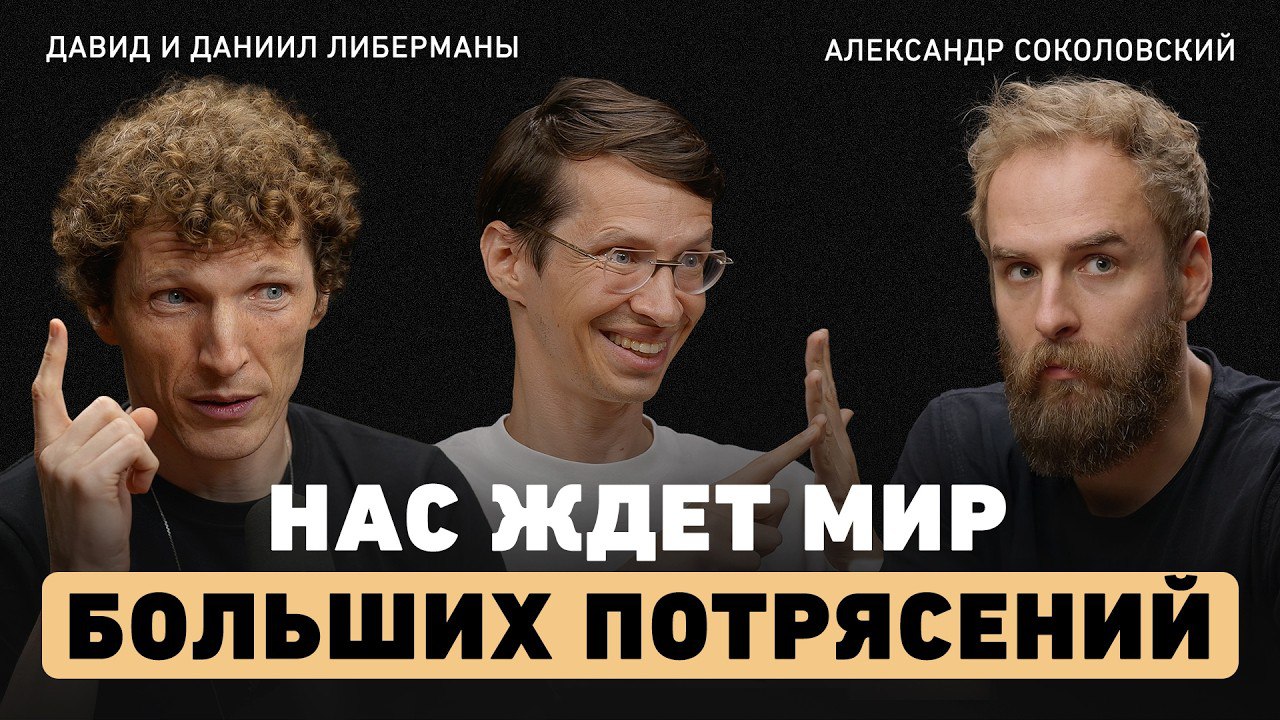
The Liberman brothers explained why time is running out.
We’re at a breaking point
Three years ago, a behind-closed-doors meeting in Silicon Valley defined the future of AI. OpenAI, Microsoft, Nvidia, and the US government struck an informal pact on GPU distribution. That was the moment it became clear: artificial intelligence isn’t just a technology — it’s the new oil of the 21st century.
This isn’t a bubble, it’s a transformation
Yes, 98% of AI startups will die. But that’s normal — venture capital has always worked this way. Amazon also dropped 98% in 2000. The difference is that people are PAYING now — $20/month for ChatGPT because they see real value. OpenAI grew from $1B to $15B in revenue in a single year. History has never seen that kind of growth rate.
A new bipolar system is forming
The US controls 90% of the world’s AI compute. China is strangled by sanctions, getting chips smuggled through Singapore and Malaysia. Every other country is bargaining for GPU scraps in geopolitical deals. Nvidia has become the key to national security.
The main threat: centralized control
The world is moving toward a scenario where 5 American companies — OpenAI, Microsoft, Google, Meta, xAI — control all of AI. And the US government controls those companies. Which means someone gets to decide whether you’re “behaving well enough” to be granted access to the technology.
The alternative path: decentralization
Bitcoin showed the way. Its infrastructure (26 GW) is already larger than all AI giants combined. Over 15 years, mining efficiency improved 300,000x through competition among thousands of independent players. Apply that same model to AI — nobody controls it, anyone can improve it, superintelligence becomes accessible to everyone and nearly free.
What happens next?
The Libermans give a 99% chance to US dominance and 1% to decentralization. But that 1% is our only shot at not ending up in a world where technological progress is controlled from a single center. The future is already here — it’s just not evenly distributed. And right now is when it gets decided.
⏳ У нас 1% шанс избежать мира, где один игрок решает, достоин ли ты доступа к AI.
Братья Либерманы объяснили, почему время истекает.
🔮 Мы в переломной точке
Три года назад в Кремниевой долине прошла закулисная встреча, которая определила будущее AI. OpenAI, Microsoft, Nvidia и правительство США заключили негласный пакт о распределении GPU. Это был момент, когда стало ясно: искусственный интеллект — не просто технология, а новая нефть 21 века.
💰 Это не пузырь, это трансформация
Да, 98% AI-стартапов умрут. Но это нормально — венчурный капитал всегда работал так. Amazon тоже падал на 98% в 2000-м. Разница в том, что сейчас люди ПЛАТЯТ — $20/месяц за ChatGPT, потому что видят реальную ценность. OpenAI вырос с $1 млрд до $15 млрд выручки за год. Такого темпа роста история ещё не видела.
🌍 Формируется новая биполярная система
США контролирует 90% мировых вычислительных мощностей для AI Китай задушен санкциями, получает чипы контрабандой через Сингапур и Малайзию Все остальные страны торгуются за крохи GPU в геополитических сделках Nvidia стала ключом к национальной безопасности
⚠️ Главная угроза: централизованный контроль
Мир движется к сценарию, где 5 американских компаний (OpenAI, Microsoft, Google, Meta, xAI) будут контролировать весь AI. А правительство США будет контролировать эти компании. Это означает, что кто-то один решает, “хорошо ли ты себя ведёшь”, чтобы дать тебе доступ к технологии.
🛡️ Альтернативный путь: децентрализация
Биткоин показал путь. Его инфраструктура (26 ГВт) уже больше, чем у всех AI-гигантов вместе взятых. За 15 лет эффективность майнинга выросла в 300,000 раз благодаря конкуренции тысяч независимых игроков. Если применить ту же модель к AI — никто не контролирует, каждый может улучшить, суперинтеллект становится доступным всем и почти бесплатным.
🎯 Что будет дальше?
Либерманы дают 99% шансов сценарию доминирования США и 1% — децентрализации. Но этот 1% — наш единственный шанс не оказаться в мире, где технологический прогресс контролируется из одного центра. Будущее уже здесь, но оно неравномерно распределено. И именно сейчас решается, каким оно будет.
Если вы хотите знать что сейчас происходит в мире AI и что будет в будущем, крайне рекомендую посмотреть интервью.
1️⃣Почему DeepSeek на самом деле стоил $2 млрд, а не $50 млн 2️⃣Как одна трейдинговая компания использует 50,000 GPU для Форекса 3️⃣Почему Executive order Байдена 2 года назад решил всё 4️⃣Что стоит за встречей Дурова с президентом Казахстана 5️⃣Почему Meta скопировала Sora за 5 дней и провалилась 6️⃣Как стандарт Nvidia из 2002 года управляет миром 7️⃣Что будет, если OpenAI обанкротится 8️⃣Почему инженер тратит $2,000/месяц на AI (и скоро это будет $0)